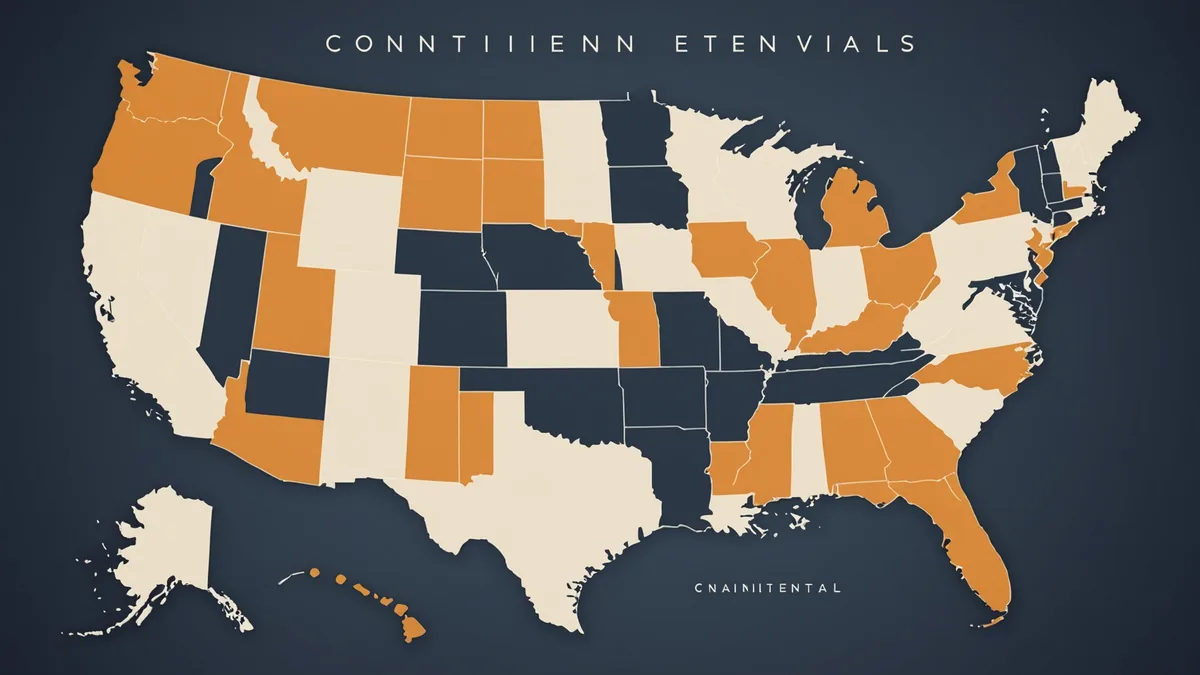
NAIC model laws don't bind anyone directly. They become binding when a state legislature or insurance department adopts them, and that adoption process is asynchronous, state-by-state, often with modifications that diverge meaningfully from the model text. For an insurer writing in 20 or more states, tracking which version of which model law is current in each state is not a research project you complete once and file — it's an ongoing monitoring function that feeds directly into your policy form compliance obligations and compliance manual currency.
This post covers the NAIC model law adoption activity from Q3 2024 through Q1 2025 — the period with the highest state adoption activity in the recent cycle — and focuses specifically on the model laws most likely to affect policy form language and compliance manual provisions for property and casualty, life, and health insurers writing in multiple states.
Why NAIC Model Law Adoption Matters for Your Policy Forms and Compliance Manual
Before getting into the specific adoption activity, it's worth being precise about the compliance chain. The NAIC adopts model laws and regulations at the national level to promote uniformity. Individual states then choose whether to adopt, partially adopt, or ignore the models — and when they adopt, they frequently modify the model language to reflect state-specific policy preferences. The result is that "adopted the NAIC model" can mean many different things in practice.
For a multi-state carrier, the policy form compliance question is not "did this state adopt the NAIC model on claims handling?" It's "which version of the model did this state adopt, were there modifications, when did the adoption take effect, and do our current approved policy forms in that state comply with the adopted version?" If your compliance manual describes claims handling obligations in terms of the 2019 version of the NAIC Unfair Claims Settlement Practices Model Act and a state updated to the 2023 model in Q4 2024, the compliance manual and your operational procedures may not reflect the current requirement.
This is the tracking problem that most multi-state insurers manage imperfectly. The adoption notifications go to regulatory affairs teams; the policy form implications go to the underwriting and compliance manual update process; the gap between those two functions is where compliance exposure accumulates.
Key Model Law Adoption Activity: Q3 2024 through Q1 2025
The following reflects the pattern of NAIC model law adoption activity during this period, focused on models with the highest frequency of policy form and compliance manual impact. This is not an exhaustive legal citation; it's a practical compliance trigger list for teams doing their own review.
NAIC Unfair Claims Settlement Practices Model Act updates: Several states moved to adopt or amend their unfair claims settlement practices statutes during this period, with changes focused on electronic communication requirements for claims notifications, updated timeframes for claims acknowledgment and investigation, and modified standards for claims handling in catastrophe-declared events. Insurers writing in affected states should review their claims handling procedures for compliance with the updated timeframes and their policy form language for any claims notification provisions that reference specific communication methods.
NAIC Model Privacy Protections Act: The NAIC's 2023 update to its privacy protection model — substantially influenced by GDPR-style concepts around consumer rights and data use transparency — has continued to progress through state adoption pipelines. States adopting the 2023 version of this model represent a meaningful departure from the prior 2002 model framework. For insurers, the compliance manual obligations affected include: privacy notice content requirements, policyholder data access and correction rights, data use limitations for marketing and underwriting purposes, and vendor data sharing agreements. The 2023 model's provisions are more prescriptive than the prior version, and the gap between a compliance manual written against 2002 model standards and the 2023 model standards is not trivial.
NAIC Life Insurance Illustration Model Regulation amendments: Updated provisions around illustration standards for life insurance products have moved through a number of states during this period. The compliance manual provisions typically affected: illustration approval procedures, the required contents of illustration summary documents, agent training requirements on illustration accuracy, and complaint handling procedures specific to illustration-related disputes. Life insurers with multi-state product portfolios should map illustration-related compliance manual sections against the current adoption status in each state they write.
The Modification Problem: When State Adoption Diverges from the Model
The practical complexity in NAIC model law tracking is not the adopted-versus-not-adopted binary. It's the modification layer. When a state legislature adopts a model law with amendments, the result is a state statute that resembles the model but is not identical to it. A compliance manual that references "NAIC Model Act standards" as the compliance benchmark without specifying the state-specific version creates an ambiguity that can surface during a market conduct examination.
We've seen this pattern specifically in states that adopted privacy model act provisions with carve-outs for small insurers or with different implementation timelines for different policyholder data categories. A multi-state insurer that built its privacy compliance framework around the model text, without mapping the state-specific modifications, may be technically compliant in thirty states and non-compliant in two — the two being the states with modifications that created different obligations.
We're not suggesting that the solution is to maintain 50 separate compliance manual versions for each state. That's operationally infeasible for most carriers. The practical architecture is a compliance manual that states the baseline obligation (typically the NAIC model standard) and a state-specific addendum or appendix that documents the modifications applicable in each state the carrier writes. The addendum approach keeps the core compliance manual maintainable while providing the state-specific specificity that market conduct examiners look for.
Market Conduct Examination Implications for Recent Adoptions
State insurance market conduct examinations are the primary enforcement mechanism for model law compliance. Examiners reviewing claims handling, underwriting practices, and policyholder communications are working from the state's currently adopted statutes — not from the NAIC model text, and not from whatever version of the law was in effect when your last policy form was approved.
The examination window creates a timing risk that's easy to underestimate. A state adoption that took effect on January 1, 2025 becomes fully examinable in that state's next market conduct cycle, which may begin within months of the effective date. Carriers that haven't updated their compliance manuals and operational procedures to reflect the new adoption are carrying examination risk from the effective date forward.
For the claims handling timeframe changes noted above: if your state adopted updated timeframes for initial claims acknowledgment and investigation completion, your claims supervisors need to be operating against the new timeframes from the effective date — not from the date your next policy form is approved, not from the date your compliance manual is next updated, but from the effective date. The compliance manual update is documentation of the obligation; the operational change has to happen simultaneously.
Building a State Adoption Monitoring Process That Actually Keeps Up
The manual version of NAIC model law adoption tracking typically works as follows: regulatory affairs team subscribes to NAIC newsletter and state legislative tracking services; new adoption notifications are routed to the compliance team; the compliance team reviews the adopted text, identifies the gap between current policies and the adopted requirements, and initiates the compliance manual and policy form update process. In theory this works. In practice, the bottleneck is almost always the gap identification step — determining which specific provisions of the compliance manual and which policy form sections are affected by the adopted text.
The challenge is that state insurance statutes are long, state adoption modifications add another layer, and the relevant compliance manual sections may be written in language that doesn't obviously map to the statutory text. A claims handling statute that uses the phrase "prompt investigation" maps to compliance manual sections on claims investigation timelines — but if your compliance manual section uses different language ("timely claims review process"), the connection isn't immediate from a text-match perspective.
The concept-level mapping approach we use in Pensvyne's insurance regulatory layer is designed specifically for this problem: mapping adopted statutory language to compliance manual obligations at the concept level, not just the keyword level, so that a state's adoption of updated claims handling timeframes surfaces the compliance manual sections on claims investigation timelines regardless of whether they use the same vocabulary as the statute.
What to Check First: The Highest-Impact Model Laws for Multi-State Carriers
If you're prioritizing your review of Q3 2024 through Q1 2025 adoption activity, the model laws with the highest frequency of compliance manual impact for multi-state carriers are, in rough priority order: the privacy protections model (2023 version adoptions), unfair claims settlement practices updates, and life insurance illustration standards. Secondary priority: market conduct examination standards model (which affects how examiners conduct reviews, not your substantive obligations, but is relevant to exam prep documentation), and rebating and inducements models for states with active market conduct examination programs in those areas.
The risk of not doing this review promptly is not theoretical. Market conduct examinations in states with recent adoptions will be conducted against the current statutory standard. A carrier that hasn't mapped the adoption activity to its compliance manual and operational procedures is carrying a discoverable gap — not because of bad faith, but because the monitoring and update process didn't keep pace with the adoption cycle.